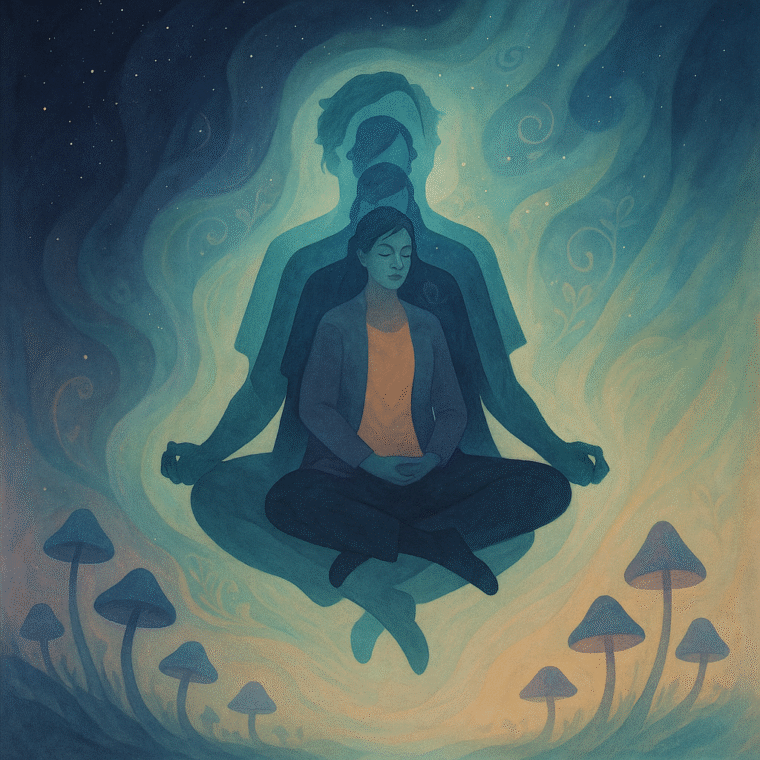
As I was running the other day, my mind wandered to a question that’s been simmering for a while: What does it mean to be my true self? Not the self shaped by my roles, my experiences, or the expectations of others, but the core of who I am beneath it all. I started thinking about the “shamanic self” I sometimes embody—the part of me that holds space for others, that feels deeply connected to something bigger. It’s real, it’s powerful, but it’s not the whole of me. It’s like an outfit I wear, not the body underneath. And that got me reflecting on how we navigate the many selves we create through life’s experiences without losing sight of who we truly are.
The Outfits We Wear
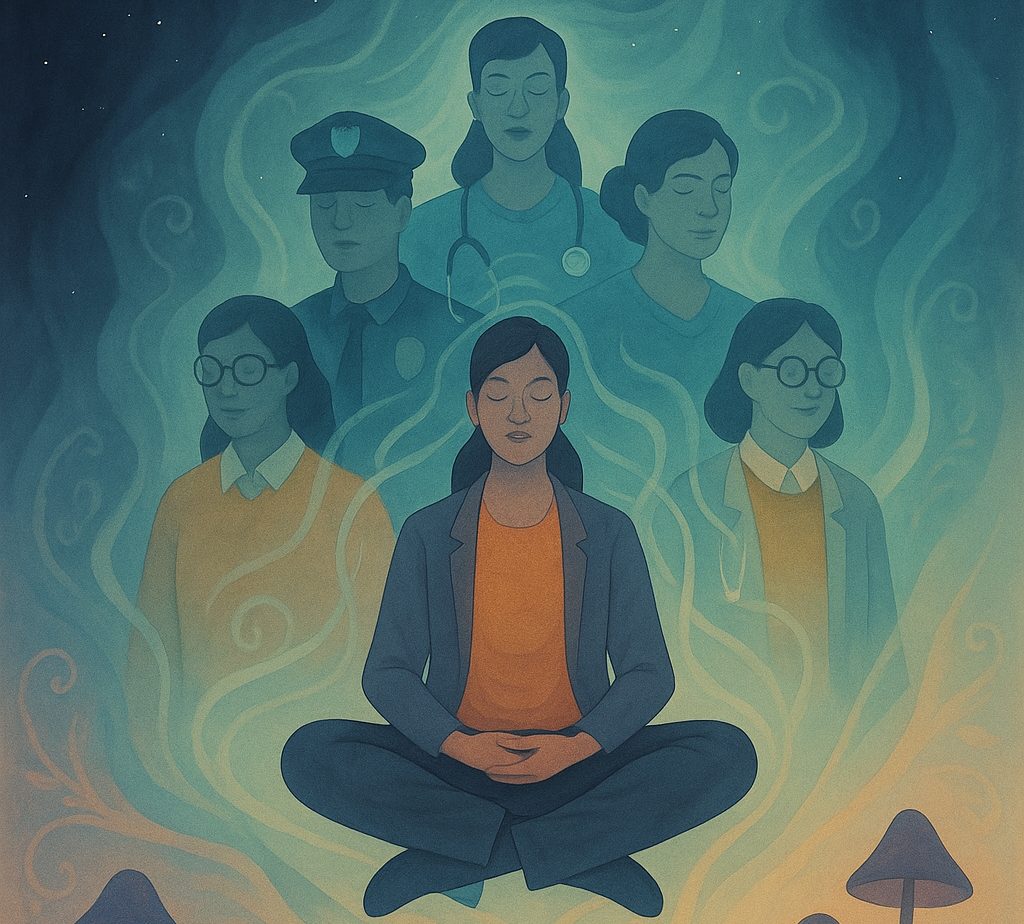
Picture this: your life is a wardrobe, and every role you play is an outfit. There’s the “partner” outfit, the “friend” outfit, the “parent” outfit, or maybe the “car mechanic” outfit. For me, one of those outfits is what I call my “shamanic self”—the part of me that shows up to guide, listen, and hold space for others. It’s a beautiful outfit, one I cherish, but I can’t wear it all the time. It’s not practical for every moment, just like you wouldn’t wear a tuxedo to mow the lawn or a tracksuit to a wedding.
These outfits are real and meaningful. When I’m holding space for someone, that’s a true expression of who I am. When I’m being Tom—the human with dreams, doubts, and a love for running—that’s true too. The magic is that all these selves can coexist. They don’t cancel each other out; they’re layers, each one adding depth to the person underneath.
The True Self vs. the Experiential Self
So, what’s the difference between the true self and these experiential selves we take on? I see the true self as the body beneath the clothes—the unchanging essence that’s been with you since you were a kid, before you picked up labels like “mechanic,” “designer,” or “space-holder.” It’s the quiet presence that watches your life unfold, the part that feels most you when you strip away the roles.
The experiential self, on the other hand, is the collection of outfits you wear as you move through life. These are the roles you step into, the skills you learn, the identities you try on. They’re shaped by your experiences—your job, your relationships, your passions. If you’re a car mechanic dreaming of becoming a graphic designer, that new pursuit is an outfit you’re trying on. It’s exciting, it’s real, but it doesn’t replace the other parts of you. You don’t stop being a partner, a friend, or a parent while you’re learning to design logos. All these layers are true at the same time.
The Risk of Over-Identification
Here’s where it gets tricky: sometimes, we let an outfit define us. If the car mechanic ties their entire identity to fixing cars, transitioning to graphic design might feel like losing themselves. Or if I lean too hard into my shamanic self, I might start to feel like I have to be the space-holder all the time, even when I just want to be Tom, the guy who laughs at bad puns or needs a quiet night in.
When we over-identify with a role, it’s like letting the outfit wear us instead of the other way around. The clothes are supposed to serve us, not become us. If we let one experience or role take over, we risk losing touch with the true self—the core that holds space for all our layers, from the mechanic to the designer, the space-holder to the human with flaws.
Finding Balance: Honouring All Your Selves
So, how do we stay connected to our true self while embracing the roles life offers? For me, it’s about balance and awareness. Here are a few ways I’m learning to navigate this:
- Check in with yourself. Whether it’s through running, journaling, or a quiet moment with a cup of coffee, take time to connect with the you beneath the roles. Ask: What feels authentic right now? Which outfits are serving me, and which feel too tight?
- Embrace fluidity. You don’t have to choose one self over another. You can be the mechanic and the designer, the space-holder and the friend. Let these roles coexist without forcing them to compete.
- Set boundaries with your roles. If one identity—like holding space for others—starts to feel all-consuming, give yourself permission to step back. Take time for play, rest, or relationships that don’t depend on that role.
- Honor the core. Find small ways to connect with your true self every day. For me, it’s running—those moments when it’s just me, my breath, and the rhythm of my feet. For you, it might be creating art, walking in nature, or simply sitting in silence.
The True Self as the Thread
I keep coming back to this idea: the true self is the thread that runs through all our experiences. It’s what allows us to try on new outfits without losing ourselves. It’s the part of me that’s present when I’m holding space for others, but also when I’m laughing with friends or learning something new. It’s the body beneath the clothes, the essence that stays constant even as life changes.
As I run, I realize that being my true self doesn’t mean rejecting my roles or experiences. It means wearing them lightly, knowing they’re expressions of me, not the whole of me. The shamanic self, the partner, the dreamer—they’re all true, but they’re not the full story. The true self is the one who gets to choose which outfit to wear, and when to take it off.
Your Turn
What outfits are you wearing right now? Are there roles you’re trying on, like the mechanic studying graphic design? Or maybe there’s an outfit you’ve outgrown, one that’s starting to feel more like a costume than an expression of you.
For me, I’ll keep running, keep reflecting, and keep learning how to wear my outfits without letting them wear me. Here’s to being all our selves, and the true self beneath it all.